
Neurostimulation devices
Neurostimulator cybersecurity for FDA premarket review
Implantable neurostimulators, their programmers and remote monitors, and the cloud behind them each get flagged for different reasons. Medcrypt helps you close the 524B gaps FDA looks for, with former FDA reviewers checking the work before you file.
Where attackers get in
Four ways in, from the cloud to device firmware.
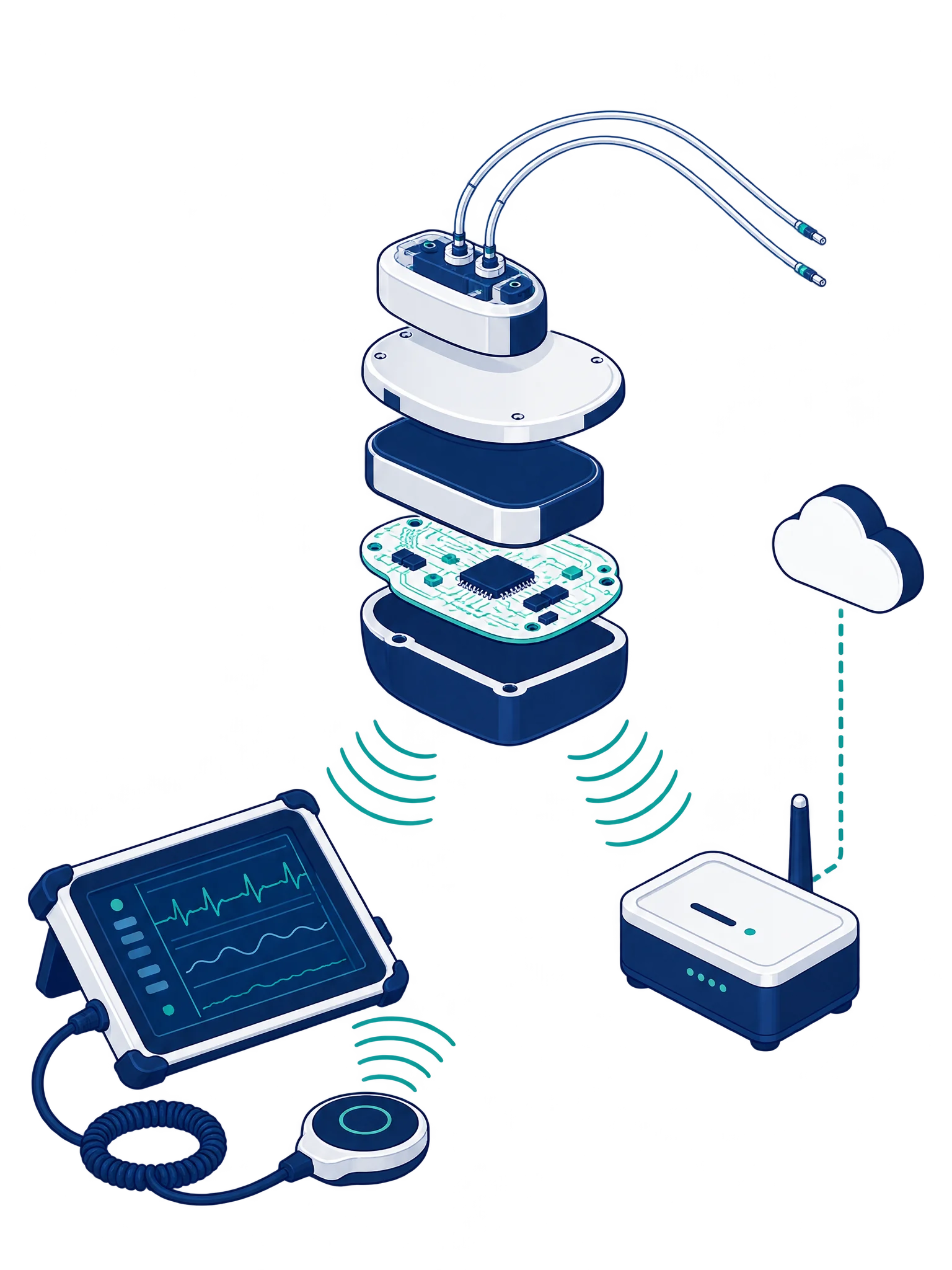
Cloud and patient dataData uploaded from the remote monitor
Clinician programmer and appsWho can view or change therapy settings
Wireless linkBLE, plus the inductive or wand link used to wake and pair
Implant firmwareStimulation logic, parameters and updates
Where neurostimulator cybersecurity gets hard
Moving to Bluetooth
Many neurostimulators are moving from proprietary RF or inductive telemetry to Bluetooth Low Energy. FDA reviewers ask for the BLE version, security mode and how you prevent man-in-the-middle attacks.
Pairing and keys
Pairing an implant to a programmer or remote monitor, and getting keys onto both, has to work without passing secrets over the radio link itself.
Power limits
An implant's battery limits how often it can advertise and how much cryptography it can run. Your security design has to show it fits inside that budget.
Remote monitoring and programming
Bedside uploads and remote programming change who can reach the implant, and from where. Remote programming needs its own threat model.
The cloud behind the device
Patient data platforms moving from on-site servers to the cloud bring new web app and API attack surfaces, and those surfaces belong in the submission's threat model.
Tooling that doesn't fit
Off-the-shelf threat modeling tools and old scoring like CVSS 2.0 rarely give reviewers what they expect. Clinician software built on .NET can also leave gaps in an auto-generated SBOM.
How Medcrypt helps
Secure BLE protocol review
We review your pairing, bonding and key provisioning design against NIST SP 800-121 and flag gaps before FDA does.
Services overviewSystem threat modeling
We cover the implant, programmer, remote monitor and cloud, with separate models where the use cases differ, such as remote programming.
Threat modelingSecurity risk management
We put a security risk management plan and procedure in place, and keep security risk separate from your safety risk file.
Clear FDA reviewSBOM and vulnerability management
We get every component, including .NET libraries, into your SBOM and monitor it after launch.
SBOM managementPenetration testing
We test the wireless link, apps and cloud the way FDA expects to see in a 524B submission.
Penetration testingPCCPs and postmarket
We plan predetermined change control for cloud and software updates, and build a postmarket plan that holds up.
Postmarket vigilance
What we've seen in neuro submissions
Neurostimulator makers come to us early in design, mid-project when a cloud or remote-care feature adds attack surface, and late when threat models and risk files must be ready for review.
Pairing over the radio: the safest designs pass pairing secrets over a separate, close-range link, not over Bluetooth itself.
One threat model for everything: remote programming and bedside upload need their own analysis.
Scoring that won't survive review: CVSS 2.0 or raw tool output usually needs rework before submission.
Missing security process: a risk SOP that cites a security risk management plan that doesn't exist yet.
SBOM gaps: clinician software components that SBOM tools miss.
How an engagement works
Gap check
Know where your neurostimulator submission stands, starting with a 1‑hour review.
Build the evidence
Threat model, SBOM, architecture views and testing, sized to your device.
Reviewer check
Former FDA reviewers go through the package before you file.
After you file
If FDA sends questions, we typically turn around a full cybersecurity response in about 10 days.
Standards we work to
- FDA premarket cybersecurity guidancewhat reviewers check
- Section 524Bthe law for cyber devices
- ISO 14971safety risk management
- IEC 62304software lifecycle
- IEC 81001-5-1secure development
- AAMI TIR57security risk management
FAQ
Yes, when the device includes software, can connect to the internet and could be vulnerable to cyber threats. That covers most implantable neurostimulators with Bluetooth, remote monitoring or a cloud data platform. The submission needs a threat model, an SBOM and a plan for monitoring and addressing postmarket vulnerabilities.
They expect you to state the Bluetooth version and security mode, show how pairing and key exchange resist man-in-the-middle attacks, and explain how keys get onto the implant and its programmer. Your testing should back each claim.
We recommend one. Remote programming lets someone change therapy settings without the patient in the clinic, which brings in new users, networks and failure modes. A threat model built for in-clinic use rarely covers that.
A predetermined change control plan lets FDA authorize specified future modifications up front, so changes made within the plan don't need a new submission. For software and cloud components, that can include planned updates, as long as the plan describes the changes, how they're validated and how risk is controlled.