Cybersecurity Risk Exposure of Radiology Practices and Imaging Centers
Why encryption challenges, legacy technology and large volumes of sensitive data make radiology practices targets.
Read article
CT and MRI systems exchange DICOM images with PACS in highly connected environments that mix old and new technology from different manufacturers. Medcrypt helps manufacturers secure communication and legacy systems in line with FDA cybersecurity guidelines.
Four ways in, from the hospital network to service access.
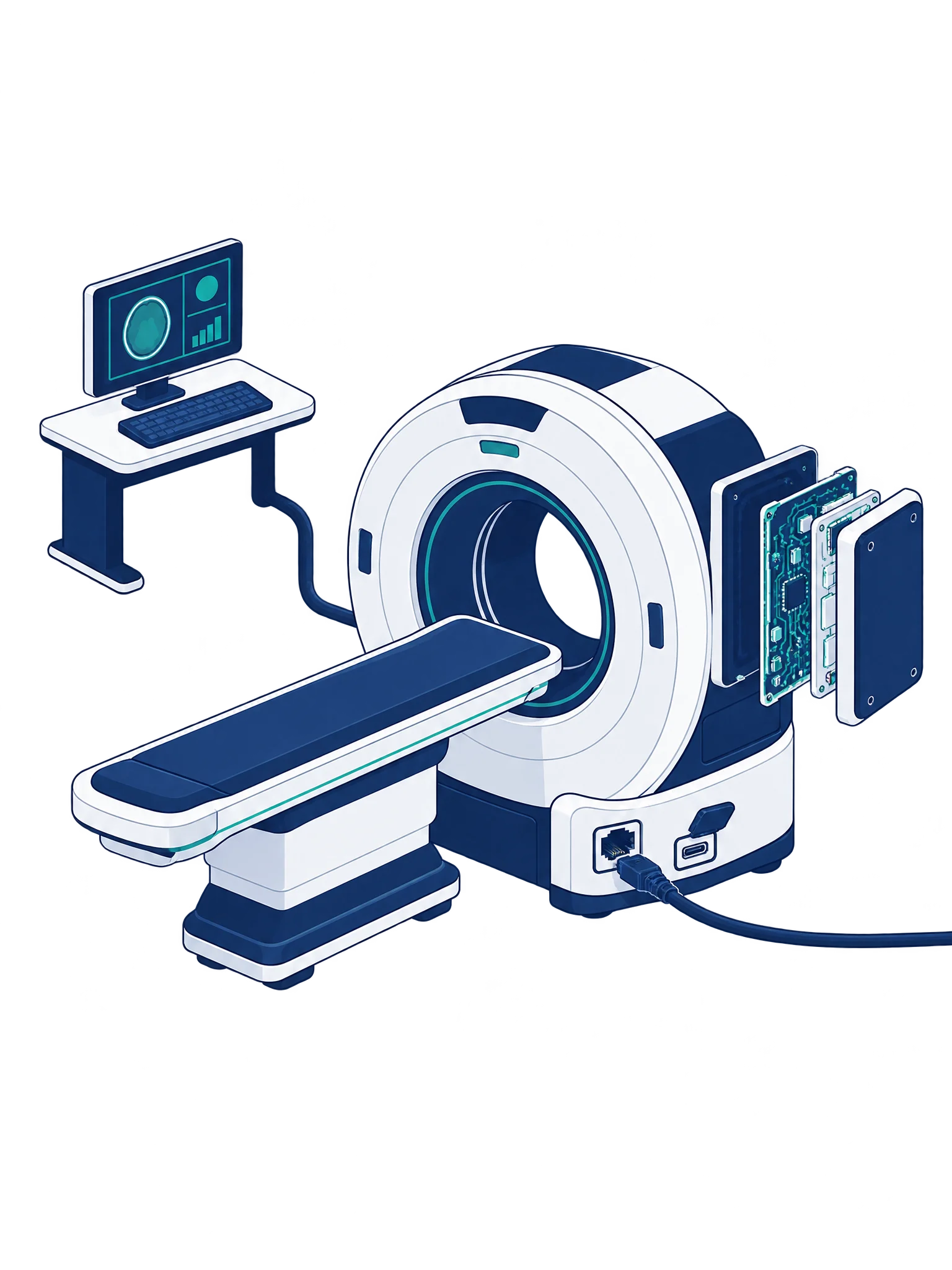
Hospital network & PACSImages and data moving between systems
WorkstationsOften older operating systems
The modalityThe scanner itself
Service accessRemote and on-site maintenance
Many older imaging products were not designed with encryption in mind, because FDA did not enforce stringent security requirements at the time.
Imaging systems often combine old and new devices from various manufacturers. Without standardized, unified solutions, encryption in transit is implemented inconsistently.
Malicious actors could manipulate imaging data, leading to incorrect diagnoses and treatment plans.
Communication protocols must be tailored to each healthcare delivery organization's workflows, with radiology, clinical engineering and IT all involved.
Installed imaging systems get managed certificates and keys, USB field provisioning and modern encrypted protocols, without source code changes.
Data securityRisk assessments, SBOM lifecycle data, patch planning and FDA-focused expert support for devices already in the field.
Legacy device servicesThreat models drafted from your device architecture and checked for submission readiness by former FDA reviewers.
Threat modelingKnow where your imaging submission stands, starting with a 1‑hour review.
Threat model, SBOM, architecture views and testing, sized to your device.
Former FDA reviewers go through the package before you file.
If FDA sends questions, we typically turn around a full cybersecurity response in about 10 days.
Secured authentication and encrypted communication across all system components, with no source code changes.
Read case studyWhy encryption challenges, legacy technology and large volumes of sensitive data make radiology practices targets.
Read articleWhat makes secure communication between imaging devices and systems hard, and steps to start.
Read articleMany older imaging products were not designed with encryption in mind, because FDA did not enforce stringent security requirements at the time. Imaging systems also combine devices from various manufacturers and old and new technologies, which complicates securing data in transit.
In one Medcrypt project, a 3D mapping system used during surgery ran multiple independent codebases that could not be modified due to FDA clearances. Medcrypt deployed a security agent without source code modifications, which preserved FDA approvals and secured authentication and encrypted communication across all system components.
Section 524B applies to cyber devices: devices that include software validated, installed, or authorized by the manufacturer, have the ability to connect to the internet, and could be vulnerable to cybersecurity threats. The test is whether the device is capable of connecting, not only whether its intended use involves connecting.
Not usually. DICOM supports TLS and authentication, but many imaging devices ship with them turned off or unsupported. FDA reviewers expect your threat model and SBOM to cover the DICOM stack and how connections to PACS and other systems are secured.