
IVD cybersecurity, from a former FDA diagnostics reviewer

Lab instruments, middleware and LIS connections are all in scope. We help you show FDA, and its inspectors, that you've got them covered.

Where IVD cybersecurity gets hard

  1. More IVDs are cyber devices than you think
  2. The whole test system is reviewed
  3. Legacy lab connections
  4. Inspections now cover cybersecurity

Where IVD cybersecurity gets hard

  • More IVDs are cyber devices than you think

    If it has software and can connect, even through a USB port, 524B can apply.

  • The whole test system is reviewed

    Middleware, off-the-shelf software and LIMS count, not just the instrument.

  • Legacy lab connections

    Older LIS and HL7 links can force you to weaken a secure design.

  • Inspections now cover cybersecurity

    Under QMSR, risk management, management review and internal audits are in scope.

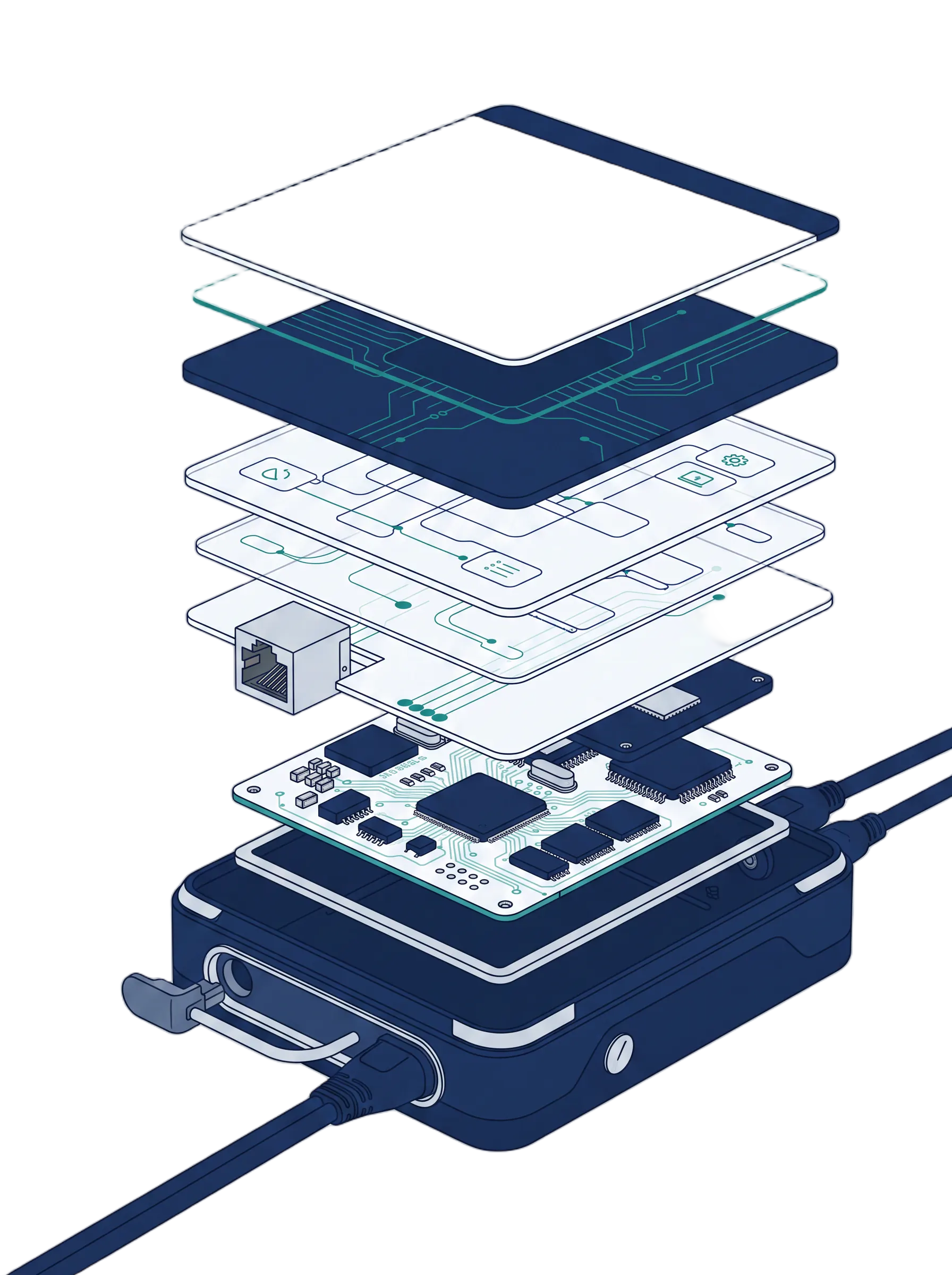
Where attackers get in

  1. LIS & EHR connectionsResults moving into hospital systems

  2. Middleware & LIMSOff-the-shelf software between instrument and lab

  3. Instrument softwareThe analyzer and its operating system

  4. Service & USB accessUpdates, maintenance and removable media

Naomi Schwartz, VP of Regulatory Strategy
Naomi SchwartzVP of Regulatory Strategy

A former FDA diagnostics reviewer

  • Six-plus years as a premarket reviewer in FDA's in vitro diagnostics office (OHT7)
  • Managed postmarket triage of cybersecurity vulnerability disclosures for IVDs
  • Opened the cybersecurity session at AMDM's 2026 Focus Meeting

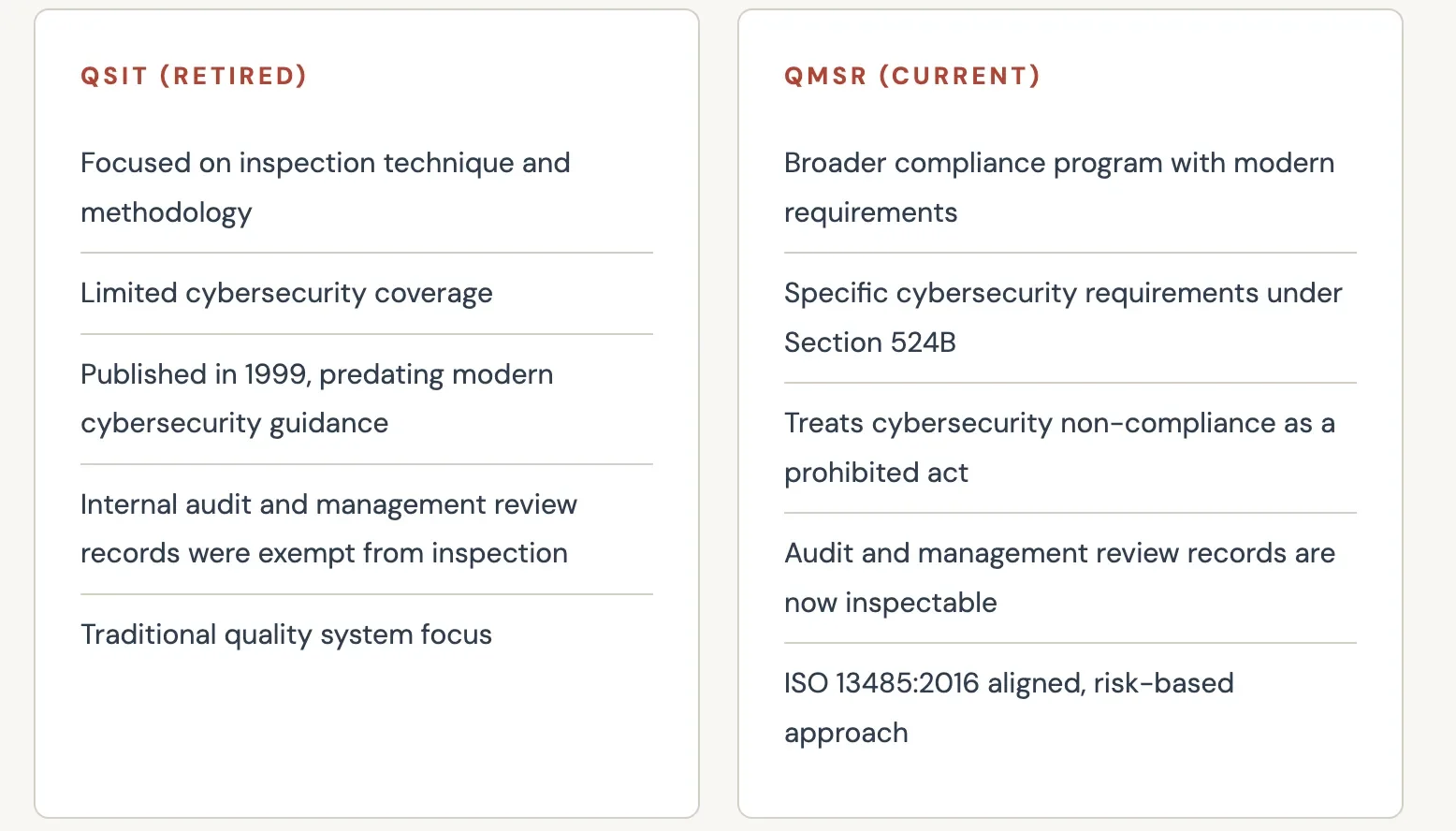
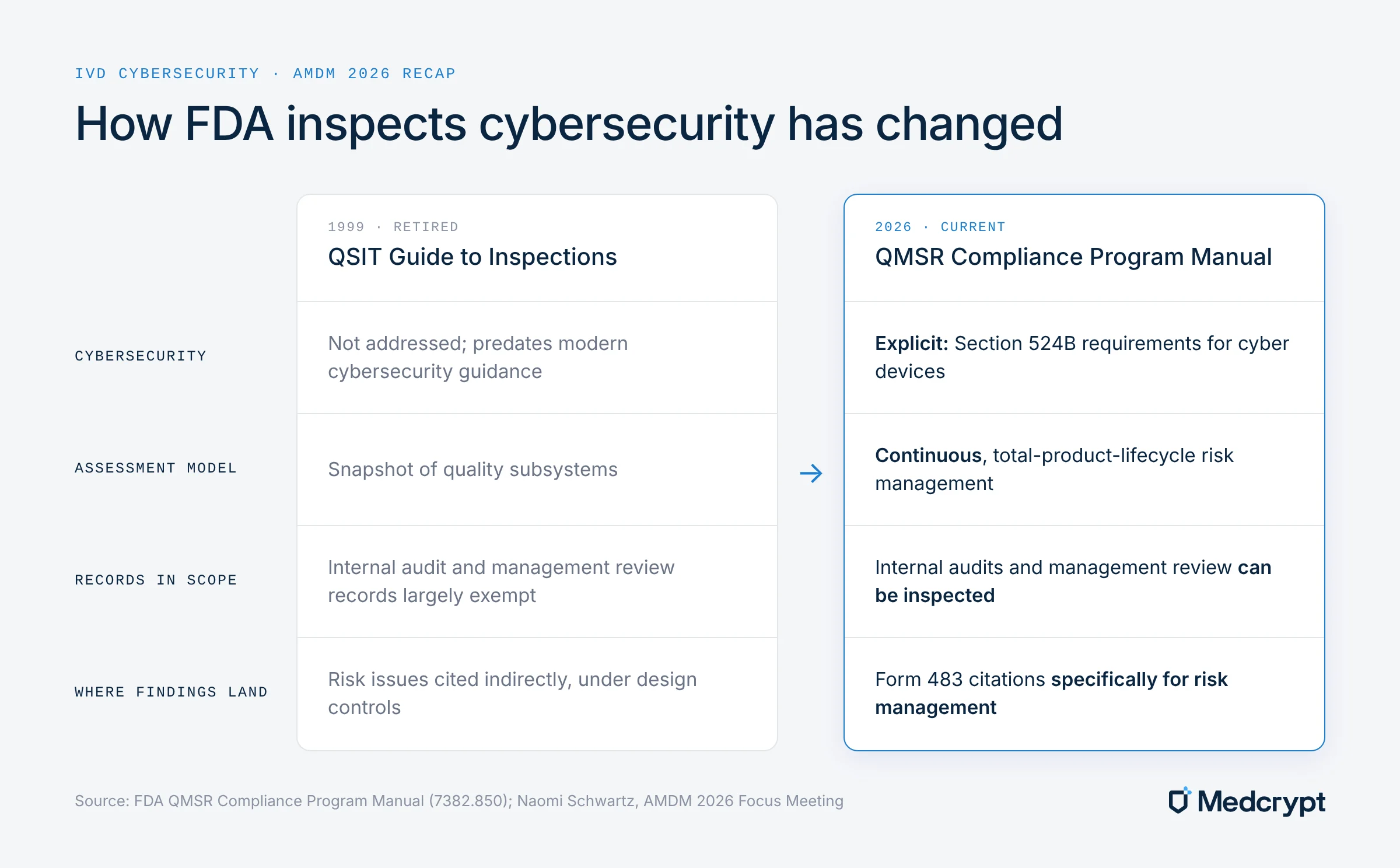
QSIT to QMSR: what changed

  • 1999 QSIT guideCybersecurity not explicit

    2026 QMSR Compliance Program ManualSection 524B pulled in explicitly

  • 1999 QSIT guidePoint-in-time checks

    2026 QMSR Compliance Program ManualContinuous, total-lifecycle risk management

  • 1999 QSIT guideInspectors trained to ISO 13485

    2026 QMSR Compliance Program ManualInspectors trained to the compliance program manual

  • 1999 QSIT guideManagement review out of scope

    2026 QMSR Compliance Program ManualManagement review and internal audits in scope

How an engagement works

  1. 1

    Gap check

    Know where your IVD submission stands, starting with a 1‑hour review.

  2. 2

    Build the evidence

    Threat model, SBOM, architecture views and testing, sized to your device.

  3. 3

    Reviewer check

    Former FDA reviewers go through the package before you file.

  4. 4

    After you file

    If FDA sends questions, we typically turn around a full cybersecurity response in about 10 days.

Start with a gap check

A quick self-check for IVD teams

  1. Is cybersecurity connected to the rest of your QMS?

  2. Would your documents survive a consistency check?

  3. Do your MDR and complaint numbers make sense next to your peers'?

  4. Do you have a plan for legacy products?

  5. Does leadership see cybersecurity risk?

Further reading

Standards we work to

  • FDA premarket cybersecurity guidancewhat reviewers check
  • Section 524Bthe law for cyber devices
  • ISO 14971safety risk management
  • IEC 62304software lifecycle
  • IEC 81001-5-1secure development
  • AAMI TIR57security risk management
  • QMSRFDA's quality system rule

FAQ

Yes, if the device was submitted after March 29, 2023 and meets the cyber device definition: software, the ability to connect to a network, and potential vulnerability to cybersecurity threats.

It's FDA's 2026 inspection program for the Quality Management System Regulation. It replaces the 1999 QSIT guide and explicitly incorporates Section 524B for cyber devices.

Yes. Internal audit and management review records are now eligible for inspection, including how they address cybersecurity risk.

Building or updating an IVD?

Talk to an expert