
Cardiac device cybersecurity for PMA review
Cybersecurity deficiencies found during PMA review can threaten approval and launch for pacemakers, implantable cardioverter-defibrillators (ICDs), and the programmers and remote monitors that connect to them. Medcrypt embeds cybersecurity expertise in your team, with former FDA reviewers keeping remediation focused on regulatory priorities.
Where attackers get in
Four ways in, from the cloud to device firmware.
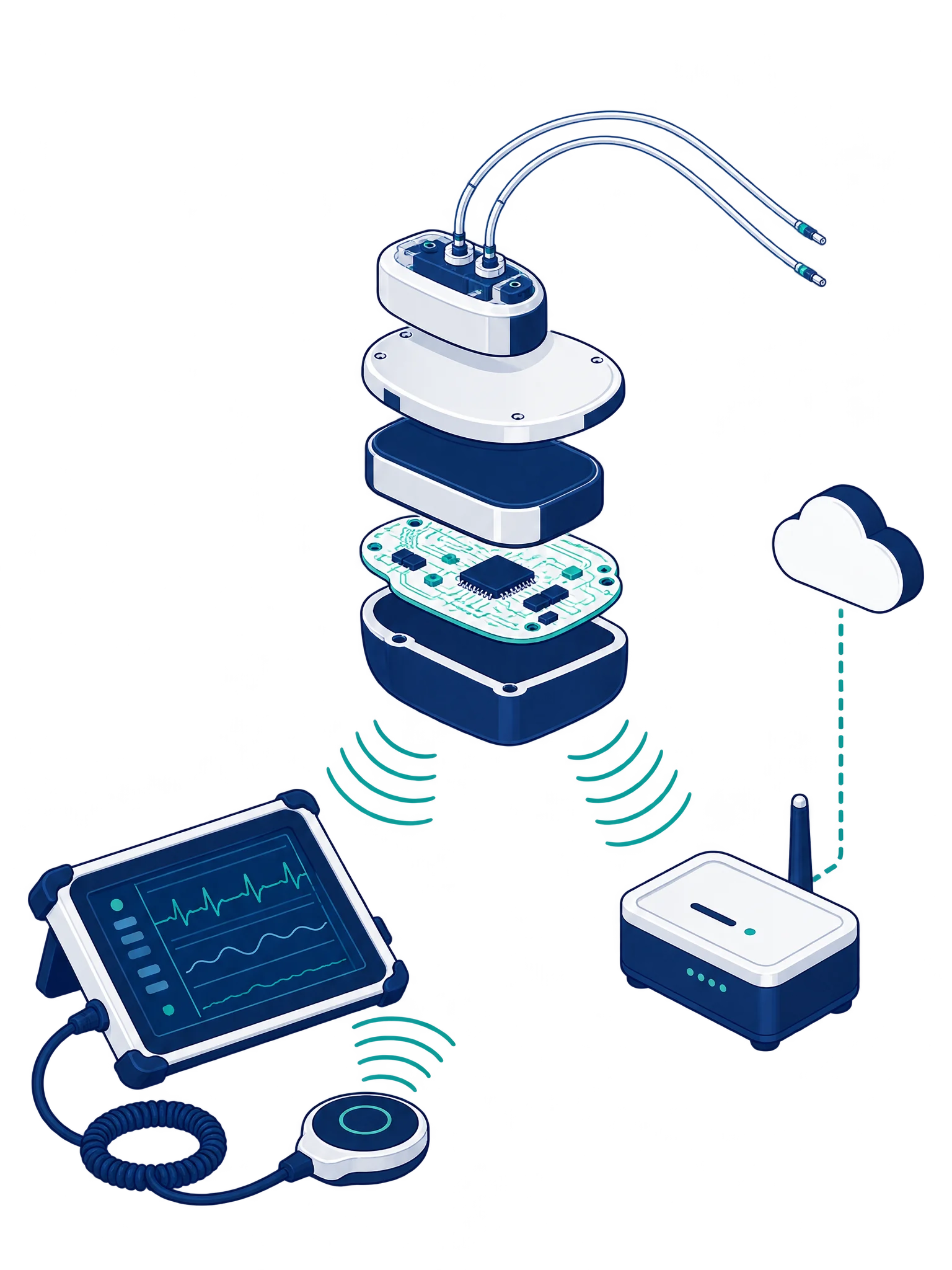
Cloud & remote monitoringData leaving the device
App or programmerWho can view or change settings
Wireless linkHow the device talks to the outside
Device firmwareTherapy logic and settings
Where cardiac device cybersecurity gets hard
Documentation gaps
Gaps in cybersecurity documentation are one of the deficiency types that can surface during PMA review.
Software vulnerabilities
Vulnerabilities flagged in review call for targeted software updates, often without time for long development cycles.
Thin security management processes
Insufficient security management processes mean adopting new processes, not only fixing documents.
Hire or over-engineer
Full-time security hires add permanent overhead. Over-engineered fixes risk usability and a higher cost of goods sold.
How Medcrypt helps
Deficiency response
Former-reviewer guidance, evidence gap review and response support for FDA cybersecurity deficiencies.
Respond to deficienciesEmbedded expert support
On-demand cybersecurity expertise led by former FDA reviewers, including 510(k) and PMA submission support.
Services overviewAudit your submission
Reviewer-style findings, severity-ranked and mapped to the requirement each one cites, before you file.
Regulatory audit
How an engagement works
Gap check
Know where your cardiac device submission stands, starting with a 1‑hour review.
Build the evidence
Threat model, SBOM, architecture views and testing, sized to your device.
Reviewer check
Former FDA reviewers go through the package before you file.
After you file
If FDA sends questions, we typically turn around a full cybersecurity response in about 10 days.
Case study

Medcrypt PMA Remediation Success: Overcoming Major Cybersecurity Deficiencies for Cardiac Device
Increased PMA approval confidence through remediation of all identified cybersecurity deficiencies, at lower cost than hiring permanent staff.
Read case studyStandards we work to
- FDA premarket cybersecurity guidancewhat reviewers check
- Section 524Bthe law for cyber devices
- ISO 14971safety risk management
- IEC 62304software lifecycle
- IEC 81001-5-1secure development
- AAMI TIR57security risk management
FAQ
Yes, when the device includes software, can connect to the internet and could be vulnerable to cyber threats, which covers most pacemakers and ICDs with wireless telemetry or remote monitoring. The submission needs a threat model, an SBOM and a plan for monitoring and addressing postmarket vulnerabilities. If you also make implantable neurostimulators, see neurostimulator cybersecurity.
In one Medcrypt project, a cardiac device manufacturer's PMA deficiencies spanned documentation gaps, software vulnerabilities and insufficient security management processes. Remediation combined documentation improvements, targeted software updates and new security processes, each scoped to address FDA concerns.
Not necessarily. In that project, Medcrypt embedded on-demand cybersecurity expertise in the manufacturer's team instead of permanent hires. Former FDA reviewers kept the work on regulatory priorities, which avoided over-engineering that could harm usability or raise manufacturing costs.